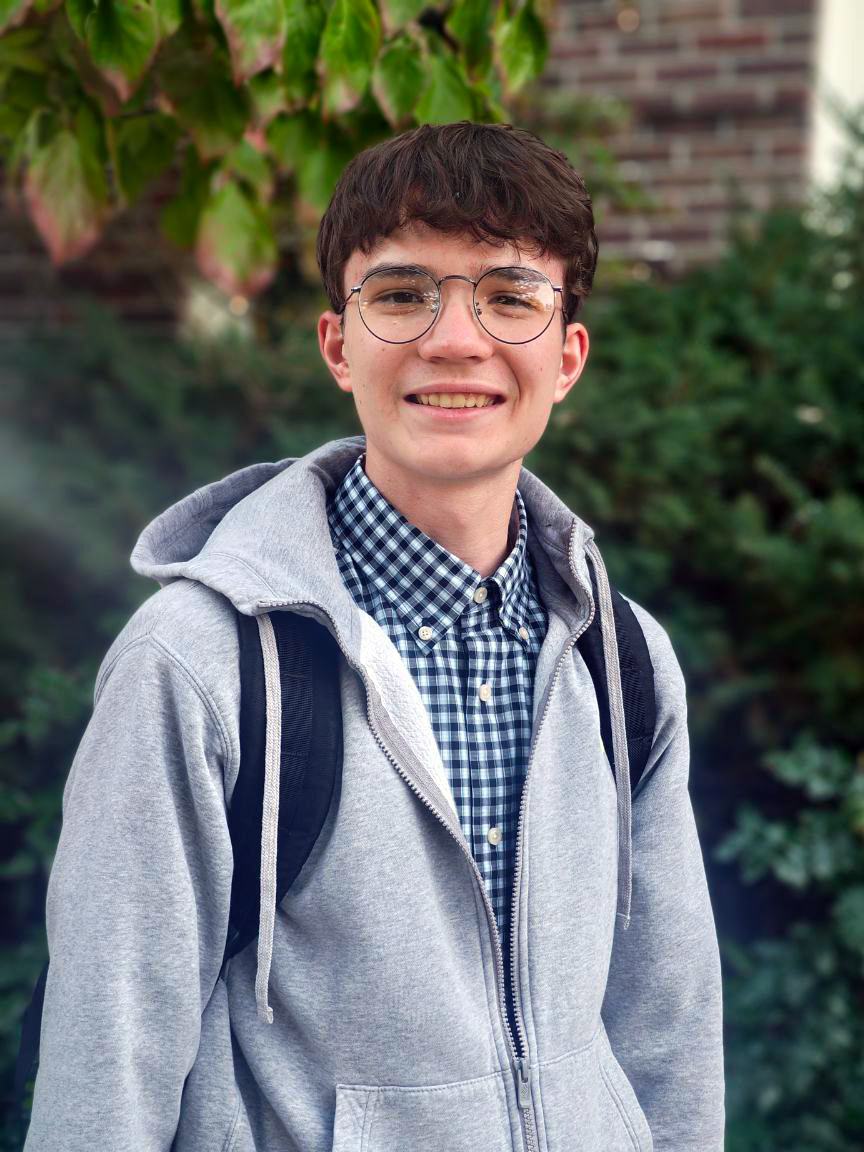
Gleb Paserba
Alexander A. Krasnyanskiy, Esq,
February 16, 2026
Additional coverage on the same matter — a report by Jasmine Garsd for NPR: As Trump dismantles asylum programs, Russians and Ukrainians fear for future
RECAP 2026
Today RECAP received the case of Bogdan
He is a Russian citizen originally from the Far East. Together with his wife and two daughters, Bogdan has been forced to seek protection in the U.S. from the Putin regime. He had to flee Russia, leaving everything behind, because he faced immediate conscription into an illegal war against Ukraine—even though he has two children and one of his daughters has a disability.
Bogdan agreed to be interviewed for our project. However, since his parents are still in Russia, he asked us not to reveal his last name.
Gleb: Hello, Bogdan! Thank you for agreeing to talk. To start, tell us a little about yourself: where you're from, and how did you even end up in America?
Bogdan: Hello. I'm originally from a small town in Russia's Far East. I graduated from a state university (name omitted for confidentiality reasons) with a degree in foreign languages. I studied English and Chinese, as well as Latin and Russian philology. While in college, I was lucky enough to visit the U.S. twice through an exchange program. By 2023, I'd traveled to the U.S. twice, and I really liked it—you know, a real democracy, a free society. Honestly, back then I wasn't planning to emigrate—I thought I could live and work in Russia. But circumstances forced me to leave, and now I'm here.
Gleb: Interesting. Tell me, how did those trips affect you? What do you remember?
Bogdan: Quite a lot—it was a really significant experience. I remember that after I came back from school, I tried to make a difference in my hometown. Back in 2012, a few friends and I started a healthy-lifestyle club. We just met up, worked out, did group runs, marathons. During training we'd sometimes talk about politics and dream about a better future for our country. Back then, a lot of people—not just us—wanted change, and we didn't want to stand on the sidelines.
Gleb: Since you brought up politics, I remember you previously mentioned your activism related to the Cossack minority in Russia. Can you tell us about that?
Bogdan: Yes, of course. By heritage and identity, I'm a Cossack. In Russia I really did take part in an independent Cossack movement — as a counterweight to the so-called "registered" Cossacks, who are completely controlled by the state. I even ran for a seat on the City Duma in my district as a candidate from our Cossack community. I wanted to contribute to my country's well-being, but I never won a seat. We tried to draw attention to ourselves—at least at the district level—and to have our voices heard, but it all came to nothing for various reasons.
Gleb: Did the authorities know about your activity? How did they react to it?
Bogdan: They knew, and of course they didn't like it. In our country, people like us aren't welcome. As for our healthy-lifestyle club, the local authorities didn't like that we promoted a sober and active way of life, talked politics among ourselves. They saw us as troublemakers—"agents sent from the West," as people on TV in our country have been saying for about 15 years now. They actually preferred widespread drinking—because drunk people are easier to control. Suspicious men started showing up at our meetings—maybe the FSB, maybe plainclothes police—basically undercover. They'd provoke us with questions like, "Why are you gathering? Do you have permission from the local administration?" and so on. In the end we had to shut down our club, because none of my friends wanted extra trouble, that's all.
Gleb: Got it, and what about work? What did you do professionally at that time?
Bogdan: After I finished college, I got a job in my field as a translator in the protocol department at an aircraft plant in my city, around the end of September 2011. That factory was involved in producing aircraft equipment, from start to finish, including military planes. They hired me there as a translator, to accompany foreign delegations and commissions. Getting in there wasn't easy—it was a defense enterprise, and it required a security clearance for classified information. I was given a third-level security clearance, and they vetted me very thoroughly—especially my trips to the U.S. while I was in school. Honestly, just the fact that I'd been to America made a lot of colleagues suspicious, throughout all the years I worked there, thinking: what if I'm a spy, as strange as that sounds.
Gleb: Tell me more about what you did there.
Bogdan: The work varied: written translations, negotiations, and, most of all, business trips with factory delegations to other countries. I was indispensable in meetings with foreign partners, especially our Chinese counterparts. I was present at almost all meetings and negotiations, with rare exceptions. In the course of my work I also had to deal with high-ranking Russian officials. Once I even saw Putin — during his visit to our enterprise. So, a pretty unique position.
Gleb: When in 2014 the annexation of Crimea happened and the conflict with Ukraine began, the situation in Russia really changed. Did you feel that personally, and at work?
Bogdan: Oh, I sure did. After the annexation of Crimea in spring 2014, half the country seemed to go crazy. On TV, they ran aggressive propaganda around the clock, whipping people up into hatred of Ukraine—even though Ukraine is a brotherly country. I'd been there many times, and I'm partly Ukrainian myself. And at the factory, it's obvious what it was like — a defense enterprise, overseen by the government. Management controlled literally every step employees took. They forced us to take part in every election and vote "the right way". They demanded 100% turnout and support for the candidates they wanted.
Gleb: So at work they pressured you to vote for the ruling party and for Putin? What did that look like?
Bogdan: Yes! They told us: "You have to make the right choice. The President supports us, so let's support him too". They said it straight out, that you had to vote either for Putin, or for candidates from United Russia, depending on the level of the election. After every vote, management would go around the departments and ask: "Did you vote?" And they demanded written confirmation by text message that you went to the polling place. It was all complete idiocy, of course, I just don't know what else to call it. Our elections turned into a farce with a predetermined outcome. I did what I could to push back with my immediate supervisor and her boss, but I won't tell their names.
Gleb: And how did it turn out for you?
Bogdan: Nothing good, to be honest. At first I could still wiggle out of it: sometimes I managed to leave on voting days on a business trip, or arrange everything so that I wouldn't be there. But you can't always get away with it. And when I stayed in town, the conflicts started. Gradually, the attitude of management toward me got worse and worse. They started loading me with all kinds of so-called "public duties." Like, put up a poster for the party in power, or put a framed portrait of the President on the wall, or go to a rally «as part of the crowd». Sometimes they flat-out asked me to do campaigning — so other people would look and think: «well if he went, then we should too». But I couldn't do that, I just couldn't. I tried to avoid it: I asked to go on business trips, pretended that I was swamped with work, anything not to go to these events. Sometimes it worked, and sometimes — no, and then there were conflicts again. I remember that on May 9, we factory workers were ordered to show up at the military parade to supposedly show loyalty. I took it as a forced display of support for the war. So I tried to get out of it—I called and told them I was sick. But they saw through my sabotage and, in the end, issued an official reprimand. After that reprimand I already clearly understood that management was very unhappy with me, and wanted to get rid of me.
Gleb: So in the end, did they fire you?
Bogdan: Yes, in the end they basically forced me to quit. Formally it looked like "downsizing," but in reality they just pushed me out. Management created conditions that made it unbearable to keep working there. They were constantly nitpicking over little things, and tried to make me look bad. For example, when working with foreign delegations they'd say I was «going rogue» or «getting into what isn't my business», even though I did exactly what a translator is supposed to do. They gave neither clear explanations nor specific reasons, just constant hints and pressure. Basically, it got to the point where they told me straight: either you submit your resignation, or we'll lay you off.
Honestly, at that moment I even felt some relief – they'd worn me out so much with these wars with management…
Gleb: Did you try to fight it, or challenge the dismissal in any way?
Bogdan: I wanted to go to the labor inspectorate, to lawyers, but I quickly understood that the chances were slim. Because the enterprise was state-owned, and there, management covers for each other. And besides, officially, everything was by procedure: there were my written reprimands, and a write-up of me as unreliable. Our courts, as you know, are often on the side of the system. So in the end I decided to save my nerves and not get into all that. Even then I just wanted to breathe out and get away from that nightmare.
Gleb: After you left, did the pressure stop, or did you feel they kept watching you?
Bogdan: You know, it didn't stop completely. I could clearly feel that I was under surveillance. First, at the factory those handlers from the security services were always hanging around, and I think my resignation didn't go unnoticed by [agency name omitted]. Colleagues whispered that people were asking about me – like, what I was doing now after leaving. Then a couple of times, people called from unknown numbers, introducing themselves as law enforcement. Polite, but with pressure, they asked whether everything was okay with me, whether I was planning to file any "inappropriate complaints"—basically a hint not to talk too much about internal matters at the factory and not to get involved with the opposition. During the conversation, one of them mentioned details from my private messages that he absolutely shouldn't have known…That's when I had no doubts left that my phone was being tapped. Plus I started noticing weird things a lot: I'd leave the house – and some car would be driving slowly behind me. Sitting in a café, I often saw people watching me. They'd come in with me and leave with me, follow me, often at the same time. This isn't paranoia—it's an objective observation you can't explain away as coincidence.
Gleb: Were you scared? How did you even live after all of that story – without a job, and under that kind of pressure?
Bogdan: If I'm honest - yes, it was scary. I had this feeling that I was being watched around every corner, and it weighed on me psychologically. I at first basically didn't talk to anyone, just stayed home quietly. We had a little money saved up, plus my wife worked remotely a bit, so for the first while it was enough. I also took small translation jobs freelance, to earn at least something. We cut our expenses to the bone and tried to keep a low profile. I felt cornered – no proper job, no confidence in the future.
Gleb: Did your wife understand you? Didn't she blame you that because of your principles, it all turned out like this?
Bogdan: No, I got really lucky here: she understood me right away. Of course, it hurt her that our life was falling apart right before our eyes. But she herself is an honest and conscientious person, so she'd say: "Come on, don't torture yourself, you did everything right — otherwise you wouldn't respect yourself". For that I'm endlessly grateful to her. Back then we became even closer as a family, to be honest.
Gleb: And around that same time you had a baby, right?
Bogdan: Yes, right then we had our second daughter — at the beginning of 2022. The birth wasn't easy, and the first weeks after were hard: all our attention and energy went to help the baby and support my wife. We already had an older girl, so even without that it wasn't easy, and then another little one appeared. You know, it's such a mixed feeling. On the one hand – huge joy, love, a new meaning in life. And on the other – it's very scary: what awaits her in this country, what awaits them, both of my girls? I held this little bundle of happiness and thought: this is for them I have to endure everything, protect them, no matter what happens. It was exactly the birth of my younger daughter that gave me the strength not to give up.
Gleb: A child is, of course, a blessing. How did the arrival of your second daughter affect your views, and your later decisions?
Bogdan: She turned my whole way of thinking upside down. If before I could risk only myself, now I was responsible for two little humans. You know, I became even less able to tolerate the injustice around me. Looking at everything as a father, I wanted my children to grow up in a normal, peaceful country, not in a police state where people can't breathe. That, by the way, strongly affected our decision to leave – exactly the thought of the children's future.
Gleb: And then the war began. Do you remember February 24, 2022? What did you feel when you learned about the invasion?
Bogdan: I will definitely never forget that day. We woke up on the morning of the 24th, and the news was full of missiles and columns of armored vehicles… Honestly, at first I didn't believe it, even though I expected something bad. I felt shock, anger, and shame about our leadership. I couldn't understand how they could start something like that. I'm half Ukrainian — my grandmother is from Ukraine. I've been there myself, and my relatives still live in Ukraine. And Russia is bombing a "brotherly" country… it was horrifying. I felt right away that it was a catastrophe for Ukraine, and for us too.
Gleb: Did you try to protest against the war? Or did you understand that it was too dangerous?
Bogdan: In my heart, yes—I protested as best I could. In the first days, I went to the city center just to see if there were rallies. Hardly anyone came out then, and they immediately grabbed everyone and hauled them off. I just stood at a distance, and even then my heart dropped – around were buses with riot police, grabbing everyone, dragging them away. I immediately pictured my family and thought: if they lock me up, what will they do without me? At home there's an infant, and an older daughter. So yeah, I turned around and left. Later I tried online to write something, on social media I made a couple angry posts. But my wife saw and begged me to delete them: "Do you want them to come for us? You've already had trouble with them—you're on their watchlist." I thought about it, and she was right—my posts wouldn't change anything, and they could lock me up for them. I had to live through all this mostly in silence, only with close friends in the kitchen we could talk it over, and even then in a whisper.
Gleb: In those months after the war started, did you ever think about leaving Russia? After all, you weren't tied down by work anymore, and what was happening weighed on you…
Bogdan: Of course I thought about it. Every day I woke up with the feeling I had to get out. Especially since the government passed laws about "fakes" and "discrediting the army," and encouraged people to inform on each other. I understood that for me, as someone who spoke openly, there was no place left there. But we couldn't leave right away — first, our daughter was only a month or two old so you can't just hit the road with her right away. Second, we simply didn't know where to go: we had no visas, and no big stash of money. And also both my parents and my wife's are elderly, they don't want to live anywhere but their homeland, that held us too. And still there was hope that maybe everything would somehow get better, and the war would end, in short, we dragged it out, hoped for the best, as long as we could.
Gleb: Yeah, but the situation just got worse. In September they announced mobilization. Do you remember the day of the mobilization decree? How did you take it?
Bogdan: September 21… of course I remember. I immediately told my wife that we can't drag it out anymore, we have to run from Russia, otherwise they'll send me off to die. I understood that "partial" mobilization in practice became universal, and the special risk was for those tied to the defense industry. And I — a former employee of a military aircraft factory, a translator with clearance for state secrets, and I already was "inconvenient" for the system because of my stance. I realized that the law wouldn't protect me, they'd draft me and I'd be done. So that night my wife and I sat down and honestly talked, and decided clearly that if we stayed and just waited, then they'd hand me a draft notice, and then either prison for refusing, or death in Ukraine. So we had no choice left, we had to save ourselves as a whole family.
Gleb: Had you already gotten a draft notice then, or did you decide to act first?
Bogdan: They hadn't managed to hand it to me yet, I got ahead of it. But around me, acquaintances started getting draft notices, some by calls from the draft office, some had papers tossed into their mailbox. I was registered for military service like everyone, but I didn't get a summons for September 21–22. Maybe it just wasn't my turn yet. But I wasn't going to wait until it was. I heard a bunch of stories about how they caught men even without notices – on the streets and at work, and I didn't want to test my luck. I decided to leave immediately, while the country's borders were still kind of open.
Gleb: How did you decide where to run? Why did you eventually choose Mongolia, and not, Kazakhstan or Georgia for example?
Bogdan: There really weren't options — that night and the next day we just frantically searched how we could even get out. In Georgia there was already a traffic jam of cars for dozens of kilometers, where people stood for days. Kazakhstan is closer to us geographically, but there were crowds too and they said that apparently they can turn our people back right at the border, if they're already drafted. Air ticket prices shot up: I looked, to Yerevan and Istanbul everything was sold out, or a thousand dollars per ticket. We didn't have that kind of money. The thing is, I'm from the Far East, and although I didn't live in Buryatia, it wasn't that far away. Mongolia is a neighboring country, and from us you can get there by land transport too. I started reading the news and it turned out that Mongolia said it wouldn't extradite people who fled and that Russians could enter visa-free for a month. And far fewer people go there than to the same Georgia or Kazakhstan. I thought the path was not the simplest, but real, and decided I'd go to Mongolia.
Gleb: How did your path to Mongolia go? Were you able to get out quickly?
Bogdan: I left first, alone — literally at the last minute. We understood that if I kept dragging it out, they could just not let me out. I left on September 27 2022: first I got to Khabarovsk, on September 28 I flew to Irkutsk, on September 29 by plane I flew to Ulan-Ude, and on September 30 I ended up in Ulaanbaatar. My wife with the kids couldn't leave right away: our younger daughter at that point still didn't have a passport, and the paperwork took a lot of time. So I went first. I just ran wherever I could, just so nobody would take me off to war. Back then I didn't know if I'd even stay alive, and whether my family would be able to see me again someday.
Gleb: Did Russian border guards let you out calmly? Did they try to stop you?
Bogdan: Honestly, until the very last second I thought they were going to pull me aside. The scariest part was still at Khabarovsk airport: right in front of me at check-in they took away several men, and I just got lucky, when my turn came, the FSB guy who was filtering out men of draft age, stepped to another counter, and I managed to get through. Then for about three hours before the flight I literally hid and ran around the airport, sometimes I'd sit it out in the bathroom, sometimes go to another floor just so I wouldn't get caught.
Gleb: I can imagine your feelings. What did you do next, once you were in Mongolia? Did you have some plan?
Bogdan: Honestly, I didn't really have a plan. The main goal was one — just to break out of Russia, and then figure it out as I went. On the way something unpleasant happened: I met a guy from Yakutia and in conversation said that my father is from Ukraine, and my mom is from Ulan-Ude. After the words about Ukraine he changed sharply, and then led me into one of the rooms and suddenly hit me and started choking me. By some miracle I managed to break free and run, I made a commotion, but the administration tried to talk me out of calling the police, so they wouldn't have problems. After that I almost didn't sleep all night, the whole time there was a feeling that someone could hurt me here. I understood that staying in Mongolia was unsafe, and I couldn't wait. In that same night I got myself together, went to the airport, found a ticket and flew to Turkey.
Gleb: And how long did you stay in Mongolia? Why did you decide to go on?
Bogdan: Honestly I didn't stay in Mongolia long — about two weeks. At first it was just a safe haven, to get out of Russia, and after the hostel attack I understood that I needed to leave urgently further. I flew to Turkey in mid-October 2022.
Gleb: Why Turkey?
Bogdan: Turkey at the time continued flights with Russia and you could fly by plane without problems, visas weren't needed for Russians for a short period. Plus we knew that a stream of our people rushed there – meaning, there was already some kind of Russian community there, and it would be easier to adapt. But Turkey for me then wasn't an option to stay and get asylum. I understood that no status we could get there, and I had no grounds to settle in this country. It was rather the most fast and clear way to leave further and wait out the first shock, so that calmly decide what to do after.
Gleb: Tell us about your life in Turkey. How did the country treat you?
Bogdan: I arrived in Turkey in mid-October 2022, in Alanya. And literally a couple days later my wife and kids came to me and our family reunited. We understood that returning to Russia was dangerous because of mobilization and the risk of further persecution. In Turkey we lived a couple months — until leaving for the US in January 2023.
Gleb: Why did you decide to go to the US?
Bogdan: I remember that around those days when I was leaving Russia, I saw a message from the White House. The idea was that the US was ready to consider requests for protection from those who are escaping war and persecution. That's when I decided that the US is the country that really can protect me. Neighboring countries with Russia are, one way or another, subject to its influence, and the US to me looked like an island of safety, where they definitely won't reach me anymore.
Gleb: How did you get to the US? What was that even for a route?
Bogdan: We had a visa to Mexico, we flew there and with an appointment through CBP One we crossed the border into the US on foot, and that's all.
Gleb: Do you keep in touch with relatives or acquaintances, who stayed in Russia?
Bogdan: Yes, of course. I call my parents regularly – they're older people, they refused to leave, said "we lived our lives here and we'll die here". I understand them… Thank God, in our far-off village mobilization doesn't touch them because they're elderly. They worry about us, but I always reassure them: we're better off than we could have been there. I did lose a lot of friends, though – some left themselves and disappeared from view, and those who stayed, are afraid to talk openly. Sometimes they write me briefly: "Hi, how are you?" – and not a word about politics, about the war. I understand that too, they're scared. Some of my former colleagues, by the way, have been completely brainwashed – a couple straight-up support this whole slaughter, I argued with them at first on social media, then I gave up, it's pointless… In short, my circle of people now is larger here, abroad, than back home. But of course I remember Russia, and I follow the news from there closely.
Gleb: What do you dream about now? Would you like to return home someday?
Bogdan: First and foremost I dream of peace. That this madness stops and people stop dying – neither Ukrainians nor Russians. That's probably the shared dream of all normal people now. And personally – I really want to see Russia free. So that people come to power there and not beasts. I understand that this may not happen soon… but I believe that sooner or later the regime will change. I hope that time will open people's eyes to what's happening.
Gleb: Thank you very much for such a candid story, Bogdan. I wish you and your family all the best!
Bogdan: Thank you for the opportunity to speak. I hope my experience is useful to someone. Take care of yourself!
← Home, English version, BlogFebruary 16, 2026
Alexander A. Krasnyanskiy, Esq,
Gleb Paserba